
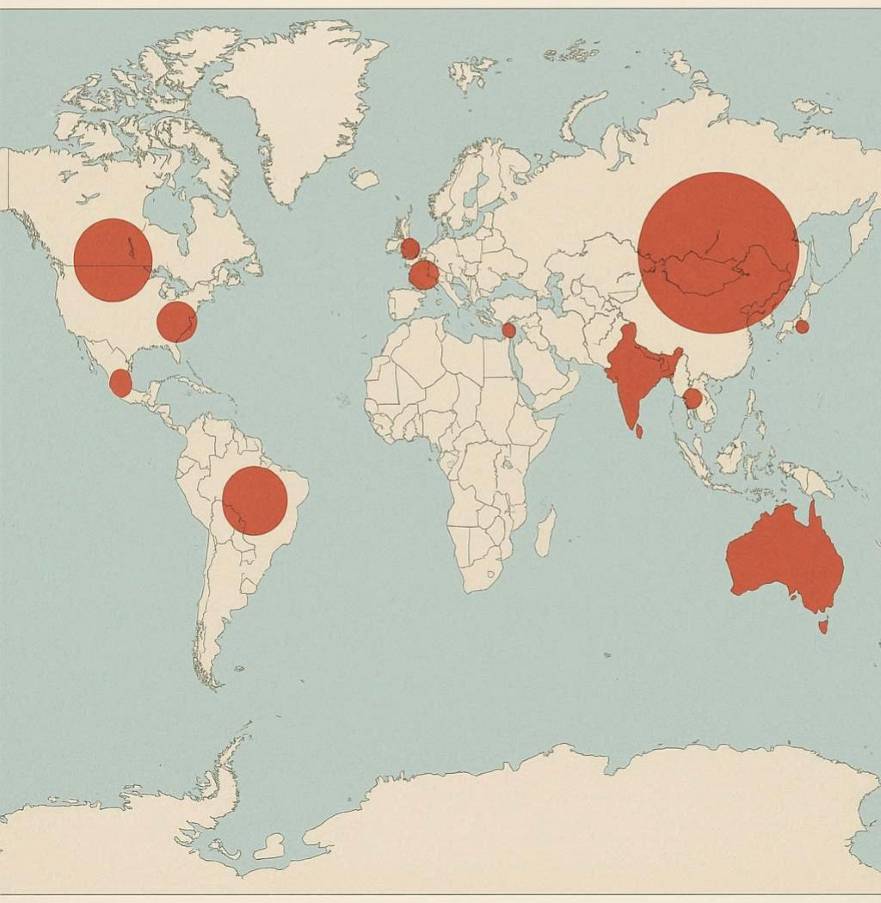
In the 21st century, humanity has stumbled upon a challenge with opportunity — an age of abundance defined not by scarcity of resources, but by the overproduction of waste. From plastic packaging to e-waste, from spent batteries to food leftovers, our industrial and consumer economies are churning out more refuse than our planet can process. The byproduct of our progress — garbage — is now the most abundant raw material available to humankind.
The future of mobility, energy, and sustainability may depend on how we learn to transform this mountain of waste into a foundation for modern civilization.
The New Abundance: Waste as a Resource
Every city today is surrounded by invisible borders of garbage — landfills creeping into wetlands, oceans saturated with microplastics, and air laced with toxic particulates from incineration. The “take-make-dispose” linear economy has reached its thermodynamic limits. As conventional resources like petroleum, lithium, and rare earths tighten in supply, the most consistent, renewable material stream on Earth may ironically be our own garbage.
Forward-thinking engineers, entrepreneurs, and researchers are now beginning to mine waste instead of ore. The transformation of waste into energy, fuel, and raw materials represents not only environmental necessity but also economic opportunity.
From Waste to Wheels: The Mobility Connection
One of the most striking shifts has been in the transportation and mobility sector. Around the world, innovators are demonstrating that discarded materials can quite literally power the vehicles of tomorrow.
- Bio-diesel from waste oils and organic matter has already proven its potential. Restaurants, which once paid to dispose of used cooking oil, now sell it to biofuel producers who refine it into clean-burning fuel. Cities like San Francisco and Amsterdam operate entire bus fleets powered by this recycled energy source.
- Plastic-to-fuel technologies are evolving rapidly. Pyrolysis, a process that breaks down plastic at high temperatures in the absence of oxygen, can produce synthetic diesel, kerosene, and gasoline. Countries such as Japan and India are piloting these systems to not only reduce landfill waste but also reduce dependency on imported crude oil.
- Rubberized roads, made using shredded discarded tires, are another innovation linking waste to mobility. These roads are more durable, absorb noise better, and prevent millions of tons of rubber waste from polluting ecosystems.
Turning Pollution into Power
Mobility doesn’t exist without energy — and our energy crisis is inseparable from our waste crisis.
Bill Gates has often highlighted that solving energy poverty and waste management requires radical innovation. His TerraPower initiative seeks to reinvent nuclear energy with reactors designed to use spent nuclear fuel — turning one of the most dangerous forms of waste into a stable, long-term power source. Similarly, Gates’ interests in water purification systems that convert sewage into drinkable water prove that there are no “unusable” materials, only unused imagination.
In developing nations, biogas plants convert food waste and animal manure into methane, which powers stoves, generators, and small vehicles. Garbage, once a burden, becomes the bridge between survival and self-sufficiency.
Circular Design and Everyday Transformation
Not all waste-derived innovation lies in industrial complexity. Many are grassroots reinventions of everyday objects:
- Old clothes are now being turned into designer handbags, reusable shopping bags, and even insulation materials. e.g. also look at brand “Vardi” seen on Karan Johar’s TV series “Pitch To Get Rich” making fashion out of used military uniforms.
- Waste paper finds second life as packaging, molded trays, and car floor mats.
- Startups are building houses using recycled plastic bricks stronger than concrete.
- Some automotive firms are experimenting with interior panels and seats made from recycled PET bottles and natural fibers.
These are not isolated examples — they mark the dawn of a circular mobility ecosystem in which every discarded item could re-enter the economy through design, chemistry, or creativity.
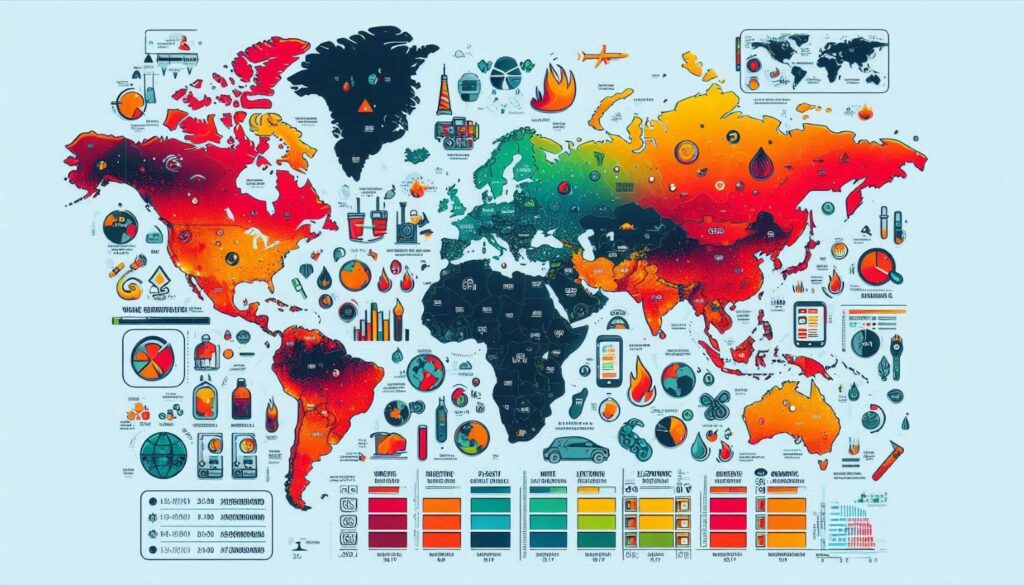
Garbage as Civilization’s Battery
If humanity’s next industrial revolution is to be sustainable, it will not depend solely on silicon chips or green hydrogen or rare earth materials. It will depend on our capacity to harvest energy, material, and mobility from waste — it is the most democratic and evenly distributed resource on Earth.
Future vehicles may run on converted waste oils or bio-synthesized fuels; cities may pave their streets with recycled polymers; and the very power grids that charge electric cars might be fed by waste-to-energy reactors.
In this light, garbage ceases to be an emblem of decay — it becomes a reservoir of possibility, a reminder that civilization’s refuse is also its raw potential. The faster we learn to see waste not as the end of consumption but the beginning of creation, the closer we come to a truly sustainable, mobile, and equitable future.
CASE EXAMPLES
1. Buses running on used cooking oil
* In NMAM Institute of Technology, Nitte (Karnataka, India), used cooking oil (UCO) collected from restaurants is processed into biodiesel and used to power city buses — they reported a bus fleet using an 80:20 diesel:biodiesel mix.
* Another example: College of Engineering Trivandrum bus in Kerala using biodiesel derived from leftover cooking oil.
Why it matters: It transforms a waste stream (discarded cooking oil) into a mobility fuel, reducing dependency on fossil diesel and diverting waste from disposal.
2. Plastic waste to fuel/oil via pyrolysis
* A Chennai-based couple developed technology to convert ~150 tons of plastic waste into pyro-oil (a crude fuel) and other by-products. (reported by The Better India)
* Research from India shows mixed plastic waste (LDPE, HDPE, PP, multilayer packaging) being processed via catalytic pyrolysis to produce fuel oil. (reported by RSC Publishing)
Why it matters: Plastic is one of the fastest-growing waste streams globally. Converting it into fuel or usable hydrocarbon fuel directly links waste disposal with energy/transport applications.
3. Rubber/tyres in road construction
* Central Road Research Institute (CRRI), India, established field trials where waste tyres (crumb rubber) were added to bitumen for road pavements. Results show improved resistance to thermal cracking, rutting, and longer life.
* A 2024 study also reviews use of “waste rubber material as crumb” on road construction.
Why it matters: Tyre waste is huge and hard to dispose of; using it in road infrastructure turns a disposal problem into a construction material advantage.
4. Bio-methane from human/sewage waste powering transport
* In Barcelona, buses on one line run on biomethane derived from sewage sludge at a treatment plant — turning human waste into transport fuel.
* Similar earlier example: Oslo planned to power buses on biomethane produced from human waste at sewage treatment plants.
Why it matters: It shows how “waste” of an entirely different type (human sewage) can become fuel for mobility — reinforcing my statement that abundant waste streams are resources.
5. Research & infrastructure transforming waste into energy materials
* Photoreforming research shows plastic waste being converted (via a high-entropy oxynitride photocatalyst) into hydrogen and organic products, indicating future potential beyond just fuel.
* Urban tree-pruning waste (e.g., Ginkgo biloba biomass) was pyrolysed to produce charcoal with high calorific value — showing even non-plastic organic waste streams have energy potential.
Why it matters: These are early-stage but important because they highlight the broad domain of waste to resource transformations, not limited to obvious materials.
Summary of Live Cases & Their Implications
- The variety of waste streams being used is vast: cooking oil, plastics, tyres, sewage sludge, biomass.
- The application spans mobility (buses/fuels), infrastructure (roads), energy systems (biofuels/biomethane), and materials (charcoal, pyro-oil).
- The scale is still often pilot or localized, but many initiatives show proof-of-concept and positive outcomes.
- The concept of garbage as the future of mobility and productivity: These cases directly demonstrate what I propose — waste as feedstock for mobility/energy/raw materials rather than mere burden on governments, society, mother nature.
Things to Watch / Limitations
- Many schemes are pilot or research-scale, not yet fully commercial at national scale.
- Some processes (especially pyrolysis of plastics) carry environmental/risk concerns: emissions, toxic by-products, regulatory compliance. For example, tyre-fuel plants in Punjab (in India) were found to be non-compliant with pollution norms.
- Infrastructure, logistic of collection and pre-processing of waste remain major challenges — sorting, cleaning, feedstock variability all matter.
- Economic viability depends on scale, regulation (subsidies, standards, enforcement of laws), market for derived products.
Lifecycle analysis is critical: converting waste to energy sometimes shifts rather than eliminates pollution; full system view is needed.
Make sure you value what you have or repair it–because tomorrow, you may pay twice as much for something created out of a worse waste than the one you cast away, thus, inadvertently end up learning to value that stranger’s waste-turned-branded-product.