Do you drive or does Google Map take you around? Do you read your email and messages or does Siri or Alexa read it out? Do you know what the local grocer charges for an apple or a burger or do you only know offers on your app? Do you have cash for emergencies at home or do you only have an app for currency?
The modern-day writer faces a question that would have seemed absurd a decade ago: How much of my writing should be done by a machine that doesn’t sleep, complain, or stare blankly at a keyboard? From business documents to target-customer’s ad-copy, from fiction drafts or entire plot outlines to journalistic reports, AI has become the loud, omnipresent coworker we didn’t hire—but can’t easily fire. The challenge now is not whether AI can write, but whether thoughtful, insightful human writing can survive alongside it. The short answer is yes. The long answer is that you need some discipline in its usage.
AI excels at speed, structure, and repetitive tasks. It can format a business proposal, clean up grammar, and provide ten variations of the same tagline before you can inhale your coffee. For a business, that’s a lot of cheap labor with less office space, less overheads and less whining of employees needing increasing remuneration. Also, no executive wants to spend three hours crafting a performance summary when an AI can produce a polished draft in thirty seconds. Used well, AI becomes the world’s best intern—fast, tireless, and at this present 21st century moment, obedient.
Yet, beyond these rudimentary tasks is business and cultural insight, wisdom and thoughtful writing? Insight in writing! Writing that actually means something! It currently, allegedly requires a human mind that has felt discomfort, hesitation, love, nuance, contradiction, pain, joy, discrimination, bullying, glory, luxury—and all the things an algorithm cannot experience.
The balance may be in treating AI as a first pass, not a final product. Running ideas past a Dr. Watson but not leaving the criminal investigation to someone who only follows you around for taking notes (speech-to-text). This may not feel ‘elementary’ as one may feel uncomfortable admitting to anyone—family, friend, foe or future employer—that they used an AI to bounce ideas back and forth.
For business documents, AI can organize information, craft or correct standard phrasing, and ensure consistency in tone. But insight—the ‘why this matters’ layer—must come from the human who understands the company, the client, and the consequences of sounding generic. AI can polish your deck; it can’t foresee the pitfalls in your resources and finances.
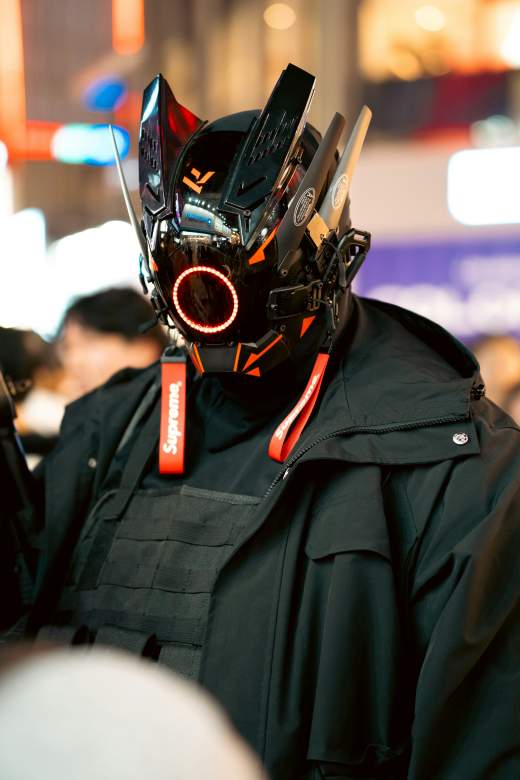
I often give the example of what constitutes a good science fiction. As you may see from all the past works to present—the most popular as well as the most award-winning science fiction are successful because they represent the future of mankind. It shows how a human deals with science and technology. It is not about a spaceship or a robot or an alien or a doomsday—it’s about human nature coming to terms with a new reality—a new normal.
A new normal is what AI is now by end of 2025.
For customer deliverables, AI may accelerate production and reduce cost. Still, customers will soon know if they’re reading something that has no soul nor personality. They know when the document is technically correct but emotionally hollow. AI’s job should be structural efficiency; the writer’s job is resonance, empathy and the very act of communication.
For fiction, the balance is clearer: AI can help brainstorm, research, even outline, experiment, and suggest target market. But AI cannot suffer. It cannot yearn for anything. It cannot feel guilt, shame, hope, betrayal, or redeemption. A story generated entirely by AI is like a meal assembled by a vending machine—it could be nutritious, maybe, but certainly not satiating.
The hunger and craving for feeling and experiencing beyond our reach and realm require a human author (and maybe an editor or two). Fiction needs perspective not prompts, it needs a personal effect and affection, something an algorithm cannot (as yet) replicate as a substitute for me and you (hey, there might be a bot reading this and I hope it doesn’t take offense….what with them being the future overlords and all).
For journalism, the risks are even higher. AI may summarize, analyze, and categorize information, but it cannot replace on-the-ground reporting. It lacks skepticism. It lacks the ability to challenge a source, feel tension in a room, or notice unsaid messages or hints. AI could and maybe should be a tool like any gadget in a reporter’s vest, as they can use all sources, options, variations to get hold of the actual message in the chaotic noise in field work. It cannot as yet become a reporter even if drones deliver Amazon packages somewhere or robotic dogs sniff mines elsewhere. Some tasks continue to demand risks for humans—to feel the terror, the joy, the zeitgeist, the pride, the doubt, the destitution, et al, only a human can translate into words—not through what’s remotely seen through lens and LED.
I believe AI and human writing will coexist whether people like it or not. Scout’s honor, gentleman’s promise, plain common decency are the only methods we can rely on for humans to retain their humanity in text, image, audio-video and all the varying forms of creations for pleasure and profit.
Profit being obvious in fast, easy and cheap labour, suggests that people who take shortcuts now, will take shortcuts through AI as well. Their life and lifestyle may just be something they can live with—you will have to choose if you can live with yourself after stealing credits away from a lowly AI bot. But of course. you may say you paid a fee to subscribe to the AI app, thus justifying your income through AI content.
However, a writer refuses to surrender his judgment. Use AI to accelerate mechanical tasks, not to replace your muse. Use it to remove clutter of unwanted prose, not meaning behind words. The future belongs to the writer who knows when to ask the machine for help and when to shut it off and think. If you are up late scrolling endlessly and feel a void—you are too steeped in this culture to find simple joys. I suggest, disengage, go outdoors, talk to more than a few humans, different ones from yesterday, walk often, sleep on time and browse more than you buy into online.