
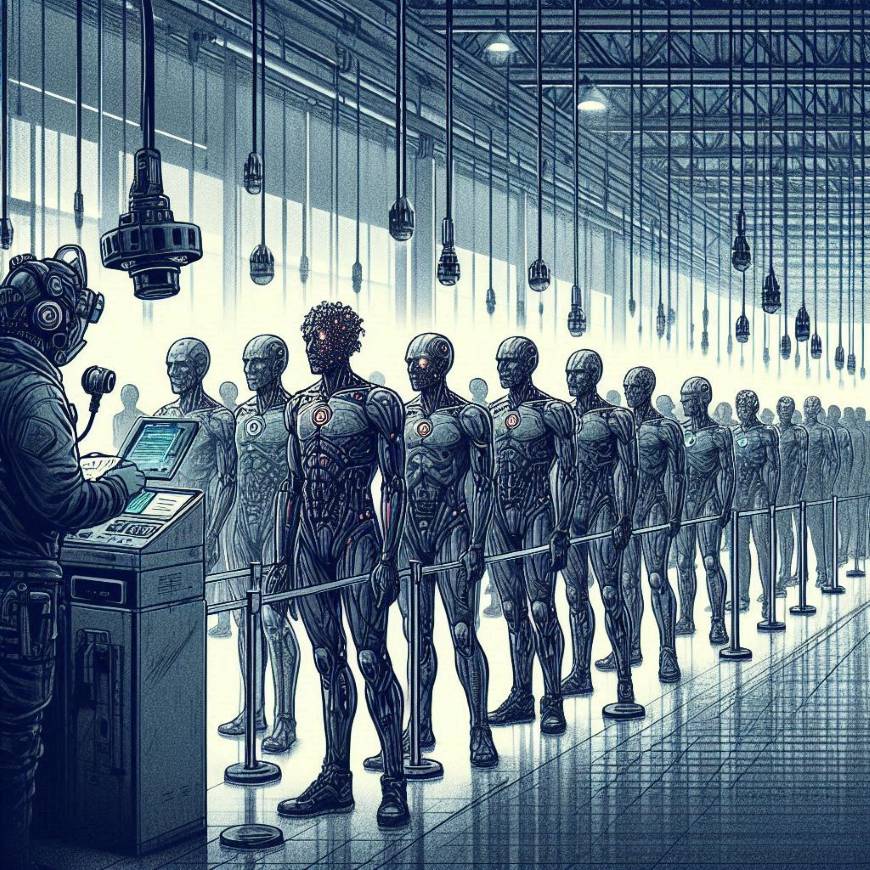
Understanding User Generated Media
—Ujjwal Dey
A treadmill of user-generated content that recommends “Post More” so that you gain fat on belly and brains—even as the internet becomes obese with ugly information and perverse data.
“Complete this week’s tasks to grow as a creator.”
“Post daily: 10 reels, 5 stories, 25 carousels.”
“Consistency beats everything.”
If social media had a disease, this would be its DNA. Like most bugs ignored, it has produced a peculiar kind of creature, Content Creators, sprinting on a content treadmill that never stops, chasing visibility that rarely gets rewarded with steady monetary income.
At first glance, the system looks empowering. Anyone can publish instantly. No gatekeepers, no waiting, no moderators or editors evaluating and questioning you. Connect to or message anyone in the world. But the absence of friction didn’t democratize content—it democratized noise. When every thought becomes a post and every moment a ‘piece of content,’ volume replaces value.
Users take photos or everything everywhere and imagine it is valuable to someone somewhere. Users say something to their pet dog or fish and believe it is a profound quote that should be published and maybe even copyrighted.
These social media platforms believe they benefit most from this arrangement. Endless posting keeps screens and feeds full, users scrolling, ads served, data harvested. The “creator growth checklist” is not a path to mastery but a carrot, sugar-coated and hung in front of every Tom, Dick-pic and Hairy Dog Owner. This production quota is disguised as self-improvement, self-fulfillment and possible self-employment potential. It encourages output over insight, frequency over substance. You’re not just creating—you’re supplying.
The social media platforms seek more and more and advice you to create more and more –because the majority ‘Misérables’ using these platforms have the trendy habit of “skipping”—every 2 to 3 seconds; they skip content. Maximum of 5 seconds viewership for any content anywhere on these platforms for any average user.
The enormous ton of junk floating in space may be manmade—but on cyberspace, it is manufactured—by willing, gullible, addicted users and their brainwashing cult-lord social media platforms with the aid of algorithms and seed funding.
It is a pseudo gig-economy that pays nothing to the worker bee, except ‘badges’ and for a fee, a ‘verified account’ tag where these users attempt to prove they are who they say they are. A parallel universe of existence which has as much validity and value as a dream within a dream.
These things benefit no one really—not the marketing man, nor the social media owner, never the user. It is all simply fat deposits on all of them—unwanted, unaesthetic and unhealthy. They think it is profitable—but the marketing data is worse than the so called information online at these platforms.
This data helps to sell junk to people creating junk for people who consume junk for people hosting junk so that they can sell junk. It is a massive junk-jerk-off.
Audience behavior adapts to the flood of surplus shit. They turn their noses and see only for a blink of any eye the most of it. If attention is stretched thin across millions of posts, consumption becomes shallow by necessity. A split second here, a swipe there. Content is no longer something to engage with; it is something to pass through.
Sadly, even genuinely thoughtful work gets compressed into the same fleeting format.
In fact, these users can’t even recognize genuine thoughtful content. They are so conditioned to junk, shit and wet dreams of becoming an influencer–they prefer the diseased meat of the pedestrian user–instead of associating or finding relevant, reasonable content worth consuming. They won’t ever quit these platforms even though there is nothing they like in it for over 3 seconds. It is the maze more advanced than the veil of “Maya”.
Contrast all of this with old discussion forums, the golden age of internet culture that modern equivalents like private Discord servers and Discourse communities are trying hard to educate the internet-literate-humans about. These spaces often introduce friction—slow posting, moderation, smaller groups, reputation built over time. That friction isn’t a bug; it’s quality control. It encourages reading before speaking, thinking before posting, and contributing with intent rather than impulse.
In such environments, conversations have memory. Ideas are revisited, refined, challenged. People aren’t performing for an invisible algorithm; they’re participating in a shared space with recognizable peers. The reward isn’t a spike in impressions—it’s understanding, collaboration, and occasionally, genuine human connection.
There is no bot or code –there are human moderators and Admins—they throttle newbies who turbie-post. They force new users to read by allowing them posting rights after many days if not a few weeks. These noobs are told they can at most reply to existing ‘threads’ but can’t create a new thread until they have enough ‘approved posts’ under their user profile.
This is not bullying nor hegemony—this is how culture and civilization is structured, nurtured, for growth and influence, and for change and improvement—advancement!
Those who try to bypass this by adding post-counts get a cooling period through account suspension—done manually and often publicly discussed before being implemented on a particular user. They can come back and be more sincere in content creation instead of spamming or being hyperactive that disrupts rather than discusses.
Here, there used to be learning, collaboration, companionship, collective nurture of passions and specific positions on subjects.
These things on old forums were not arbitrary—they were almost like bylaws of a society—and no one died and made someone King—there was a system of volunteering, and qualifying to be an Admin or a Moderator or even a user.
Today, you scroll away everything—never to be found in the sewage called social media browsing history. On traditional forums—you could refer, quote and revise old posts and threads and ideas. Develop or adapt them as needed by the times or generations.
Even platforms once known for thoughtful exchange—such as Reddit or Quora—have felt the gravity of scale, demands of Wall Street and a fidgety foolhardy userbase. As volume increases, signal-to-noise ratio drops. Threads become repetitive or reactionary, answers templated or pure certified spam, and incentives skew toward visibility hacks and popularity rather than depth.
They will lure you to post more of what is ‘trending’ so that your content sees the light of day. Actually, why would anyone want to see more of the same?
The same pattern repeats–more content is better, less meaning makes more sense to the zombie-like numb audience. You see them all walking with their head buried in their mobile phones—making evil eyes at any vehicle or person who almost crashes into them.
The core issue isn’t that people are creating too much—it’s that the system rewards the creation of anything and everything. Why judge when the audience judges not?
When success is measured in views, likes, and frequency, creators optimize for what’s easy to produce and quick to consume.
Over time, that shapes not just what we post, but how we think.
No one will ever actually benefit? Not all the wealth or the marketeers or the social media platforms will replenish the millions of unemployable morons manufactured and restrained by AI Agents—a new generation of zero-income-no-purchase-power-population.
Such Social Media Platforms soon are gaining engagement, data and affection of unprofitable clients. There may be a tiny fraction of creators who break through. Majority trade time and energy and sometimes even money for scam-like courses –to improve metrics that feel like progress –but rarely translates into any regular income.
This doesn’t mean abandoning social media entirely. It means being selective and intentional. One or two well-chosen platforms, used with a clear purpose, can still be valuable. But the idea that more posts automatically equal more growth is, at best, half-truth—and at worst, a cleverly packaged illusion.
None of the social media platforms actually have any quality control—except for copyright and IP protection, and a programmed bot attack on obscene or nude or abusive or violent content. Hence they have a bad name and worse reputation. If television was the idiot box producing idiots—these social media apps are a straitjacket creating debilitated minds.
The social media platforms have built only an elaborate public toilet but there are no walls—simply a stinking pile as seen in municipal dumping grounds. Users toil for creating content for ‘their users’ for no remuneration except satiating their own vanity and for ego waxing, with an eternal hope, an ambition of becoming an influencer, so that they can get”money for nothing and ‘clicks’ for free”.
If there’s a lesson from quieter corners of the internet, it is this—meaningful contribution will scale differently. It grows through depth, doesn’t amplify in frequency. Through dialogue, not by global distribution.
There is an overhead, an outer space, the final frontier overflowing with human garbage. On Earth, there is below our noses this cyberspace buried in obsolete content created yesterday. The rarest—and most valuable—thing isn’t another creative, informative, monetized post. It is the connection with a fellow person irrespective of agreement or disagreement. Not an echo chamber—but a round table!
Chasing content creation or private data or content monetization is not ‘social networking’—its appropriate term is, “scam”. You have lost your life—your youth and your vitality to this con! Get real, get connected with a human, not wired to a system.
Email us your benefits and risks from being on social media and ask us any related queries to get answers. Send it to GET@BUDVICE.COM